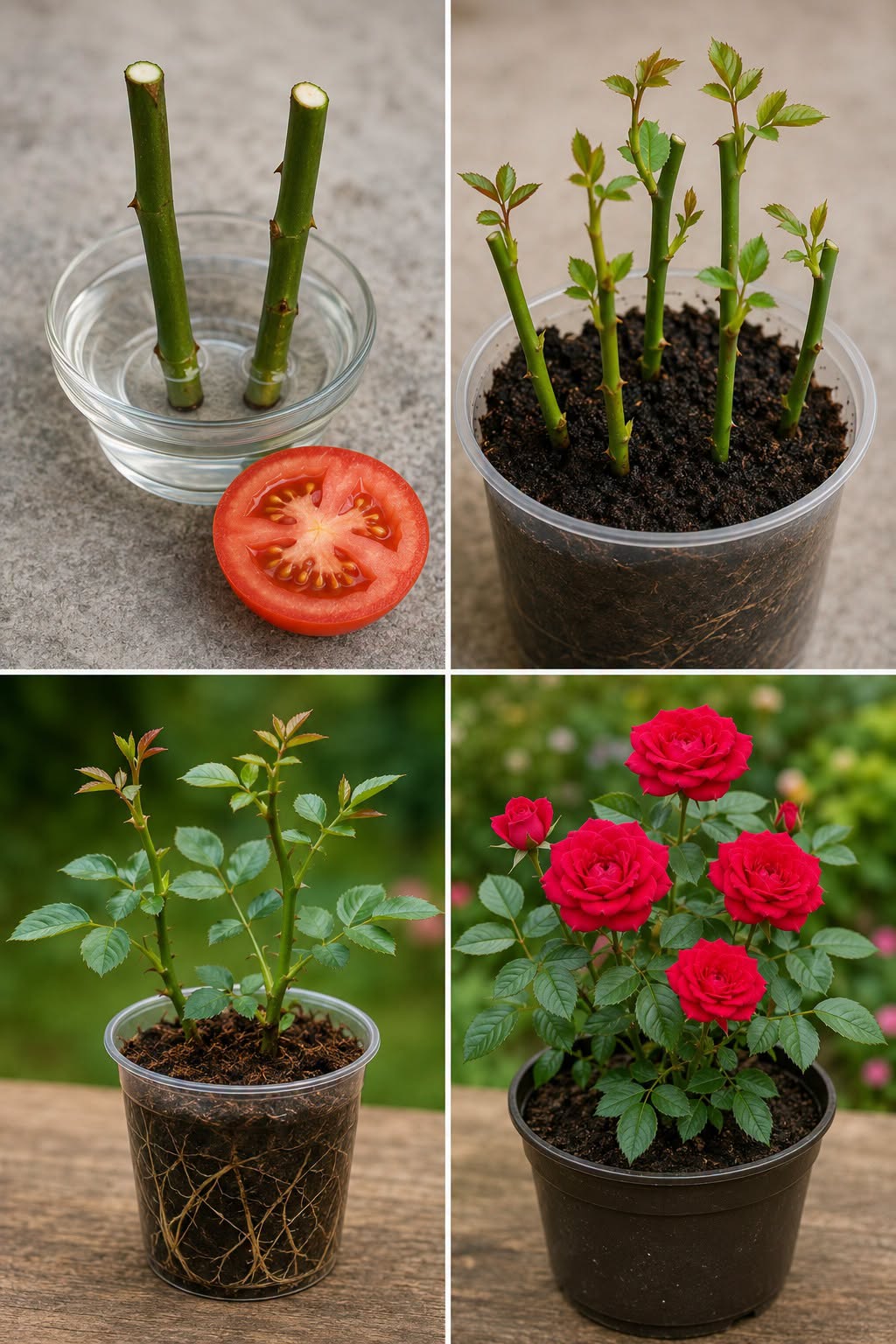
Grow Beautiful New Rose Plants from Cuttings Easily)
Growing roses from cuttings is a rewarding way to create new rose bushes from your favorite plants. With the right preparation, moisture, and care, rose cuttings can develop strong roots and grow into healthy new plants.
(Tip: Success rates vary depending on the rose variety, season, and growing conditions.)
🌹 1. Choose the Right Rose Cutting
The best cuttings come from:
✅ Healthy, disease-free rose stems
✅ Fresh growth from the current season
✅ Stems about the thickness of a pencilChoose a stem that has recently finished flowering for the best chance of rooting.
🌹 2. Cut at the Perfect Angle ✂️
Use clean, sharp pruning shears.
Make:
- A 45-degree cut at the bottom
- A straight cut at the top
Cuttings should usually be:
6–8 inches long
🌹 3. Remove Extra Leaves & Flowers 🍃
Before planting:
✅ Remove flowers and buds
✅ Remove lower leaves
✅ Keep 2–3 leaves at the topThis helps the cutting focus energy on making roots instead of supporting flowers.
🌹 4. Use Rooting Hormone 🌱
Dip the bottom end of the cutting into rooting hormone powder or gel.
Benefits:
✨ Encourages faster root development
✨ Helps prevent some infections
✨ Improves success rate
🌹 5. Try the Honey Method 🍯
Some gardeners use honey as a natural rooting aid.
How:
- Dip the cut end into honey.
- Plant in a suitable growing medium.
Honey may help create a cleaner environment, though it is not a guaranteed replacement for rooting hormone.
🌹 6. Use the Right Soil Mix 🌱
Roses root best in a light, well-draining medium.
A good mix:
- 50% perlite
- 50% potting soil
or:
- Sand
- Peat moss
- Perlite
The soil should stay moist but never waterlogged.
🌹 7. Create a Mini Greenhouse Effect 🏡
Humidity helps prevent cuttings from drying out.
Try:
- Covering with a clear plastic bag
- Using a cut plastic bottle
- Placing in a mini greenhouse
Make sure there is some airflow to prevent mold.
🌹 8. Keep Cuttings in Bright Indirect Light ☀️
Avoid harsh direct sunlight while roots are forming.
Best location:
✅ Bright shade
✅ Morning sunlight
✅ Protected area outdoorsToo much sun can dry out the cutting.
🌹 9. Keep the Moisture Balanced 💧
The biggest mistake is overwatering.
Check soil regularly:
✅ Slightly damp = perfect
❌ Wet and soggy = risk of rotMist leaves occasionally if air is dry.
🌹 10. Be Patient & Know When Roots Form 🌱
Rose cuttings usually take:
4–12 weeks
to develop roots.
Signs of success:
🌿 New leaf growth
🌿 Firm stem
🌿 Resistance when gently tuggedOnce roots are strong, transplant into a larger pot or garden area.
Bonus Rose Rooting Tricks 🌹🔥
🌿 Use Willow Water
Willow branches contain natural compounds that gardeners traditionally use to encourage rooting.
🥔 Potato Method
Some gardeners insert rose cuttings into potatoes to maintain moisture, though results vary and it is not scientifically proven to work better than traditional methods.
🌱 Root Multiple Cuttings
Plant several cuttings at once—more chances of success!
Common Mistakes to Avoid 🚫
❌ Using old, dried stems
❌ Planting in heavy clay soil
❌ Overwatering
❌ Keeping cuttings in full hot sun
❌ Forgetting to sanitize tools
❌ Removing all leaves
Best Time to Root Rose Cuttings 🌹
The ideal times are:
🌸 Late spring
🌸 Early summer
🌸 Early fall (in mild climates)Cooler temperatures with consistent moisture often produce better results.
Social Media Captions ❤️
Facebook Style:
“Don’t throw away rose stems after they bloom! 🌹✨ With these simple tricks, you can grow beautiful new rose bushes right at home from cuttings.”
Short Viral Caption:
“One rose can become a whole garden 🌹🌱”
Pinterest Style:
“10 easy rose cutting tricks that help you grow more roses from your favorite blooms!”
Final Description 🌹
Rooting rose cuttings at home is a simple and rewarding gardening project. By choosing healthy stems, using the right soil, maintaining humidity, and providing proper care, you can grow beautiful new rose plants from cuttings and expand your garden without buying new plants. 🌹✨