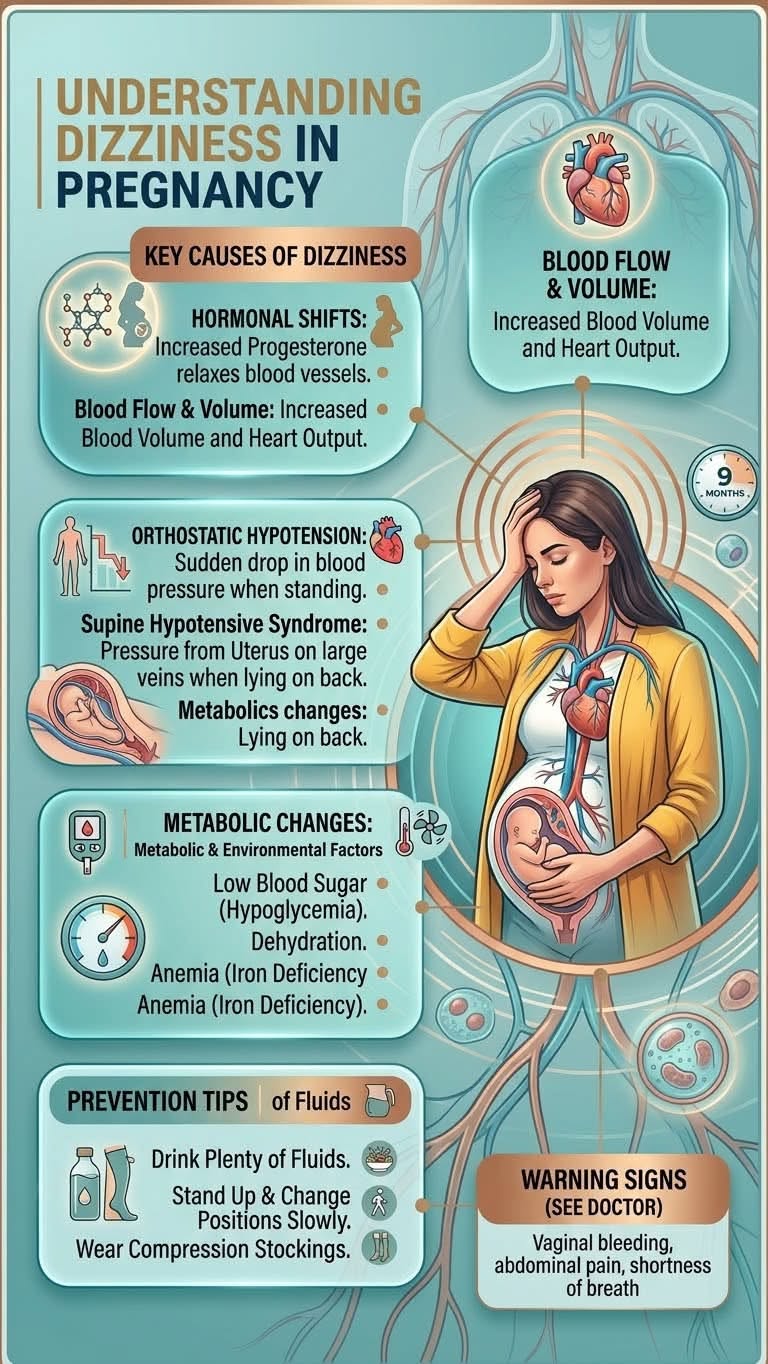
(Why You May Feel Dizzy and What Your Body Is Going Through)
Dizziness is a common experience during pregnancy. Many changes happen in the body to support the growing baby, and these changes can affect blood pressure, blood sugar, circulation, and balance.
While occasional dizziness can be normal, frequent or severe dizziness should be discussed with a healthcare professional.
🤰 1. Hormonal Changes
During pregnancy, hormones—especially progesterone—increase.
These changes can:
✅ Relax blood vessel walls
✅ Lower blood pressure
✅ Reduce blood flow returning to the heart
This can make you feel:
- Lightheaded
- Weak
- Dizzy
🤰 2. Low Blood Pressure (Hypotension)
Blood vessels expand during pregnancy to increase circulation.
Sometimes this causes blood pressure to drop, especially when:
- Standing up quickly
- Standing for long periods
- Getting out of bed suddenly
This is known as postural or orthostatic dizziness.
🤰 3. Low Blood Sugar
Pregnancy increases your body’s energy needs.
If you go too long without eating, you may experience:
- Dizziness
- Shakiness
- Sweating
- Weakness
- Feeling faint
Eating regular balanced meals and snacks can help maintain stable blood sugar.
🤰 4. Dehydration 💧
Your body needs more fluids during pregnancy.
Not drinking enough water can lead to:
- Dizziness
- Headaches
- Fatigue
- Rapid heartbeat
Staying hydrated is especially important in hot weather or after activity.
🤰 5. Anemia (Low Iron Levels)
Iron is needed to make hemoglobin, which carries oxygen in the blood.
During pregnancy, iron needs increase.
Low iron levels may cause:
- Dizziness
- Tiredness
- Shortness of breath
- Weakness
- Pale skin
🤰 6. Growing Baby Pressure on Blood Vessels
Later in pregnancy, the uterus becomes larger and may press on major blood vessels.
Lying flat on your back can sometimes reduce blood flow back to the heart, causing:
- Lightheadedness
- Nausea
- Feeling faint
Many pregnant people feel better lying on their side, especially the left side.
🤰 7. Overheating
Pregnancy can make some people feel warmer than usual.
Heat exposure may cause:
- Dizziness
- Weakness
- Feeling faint
Avoid overheating and take breaks in cool areas.
🤰 8. Stress, Anxiety, or Lack of Sleep
Emotional stress and poor rest can contribute to:
- Lightheadedness
- Feeling unsteady
- Fatigue
Pregnancy places significant physical and emotional demands on the body.
🤰 9. Low Oxygen Levels or Breathing Changes
Pregnancy changes breathing patterns and increases oxygen needs.
Some people may experience dizziness if they:
- Breathe too quickly due to anxiety
- Become short of breath
- Are in poorly ventilated areas
🤰 10. Inner Ear or Balance Problems
Not all dizziness during pregnancy is caused by pregnancy itself.
Other causes may include:
- Inner ear infections
- Ear fluid changes
- Migraine-related dizziness
- Other medical conditions
What To Do When You Feel Dizzy 🪑
✅ Sit or lie down immediately
✅ Avoid standing suddenly
✅ Drink water
✅ Eat a small snack if you haven’t eaten recently
✅ Move to a cooler area
✅ Take slow, steady breaths
When to Contact a Doctor 🚨
Seek medical advice if dizziness is:
⚠️ Severe or persistent
⚠️ Associated with fainting
⚠️ Accompanied by chest pain
⚠️ Associated with severe headache
⚠️ Accompanied by vision changes
⚠️ Associated with heavy bleeding
⚠️ Accompanied by severe abdominal pain
⚠️ New or worsening suddenly
Tips to Help Prevent Dizziness During Pregnancy 🌸
💧 Drink enough fluids
🥗 Eat regular balanced meals
🪑 Stand up slowly
😴 Get adequate rest
👟 Avoid standing for long periods
🌤️ Avoid excessive heat
🩺 Attend regular prenatal checkups
Final Description 🤰✨
Dizziness during pregnancy is often caused by normal body changes such as hormonal shifts, lower blood pressure, increased nutritional needs, dehydration, and changes in circulation. Understanding the possible causes and knowing when to seek medical advice can help support a safer and more comfortable pregnancy journey.